





How to choose Mary Jane shoes for girls
A Mary Jane looks simple. A low shoe, a strap, a rounded toe. We have looked at this same silhouette for twelve years now, in every material we can get our hands on, and it still surprises us how differently two nearly identical pairs can behave on an actual child. One scuffs at the toe by October. Another pinches the bridge of her foot by lunchtime. A third slips at the heel no matter how tight you pull the strap. None of that is bad luck. It is a shoe that was never checked the right way before it left the shelf.
We are Isa and Cori, the Co-founders of Marjen, and between the two workshops we work with in Spain and Portugal, we have handled a lot of Mary Janes. This is the sequence we actually use, the one we walk parents through at trunk shows when they are standing there holding two nearly identical pairs and cannot tell us why one is better. Occasion first, then strap, then material, then the handful of details that decide whether a shoe survives a school year or gives out by November.
1. Start with the occasion
What to look for: school dress code, ceremony, or everyday wear
The mistake we see most: one pair asked to do all three jobs at once
Occasion is the first filter because it quietly rules out materials and colors before you have looked at a single shoe. A Mary Jane built for a Tuesday at school is not the same shoe as one built for a wedding, and asking one pair to be both usually means it does neither well. Occasion tells you whether you are shopping for durability or for polish, and that one decision shapes everything that follows.
Most school dress codes call for black, brown, or navy. Weddings tend to welcome gold or silver. Winter opens the door to velvet. A ceremony asks for a shine that no playground shoe should ever have to survive. So before anything else, ask yourself plainly: is this shoe for school, for one specific day, or for everyday wear? That single question cuts the options in half before you have even touched a strap.

2. Pick the strap style
The strap is the entire engineering of a Mary Jane. It is the one part of the shoe doing real work, and we have learned, more times than we would like to admit, that not all straps do that work equally.
- A single strap across the instep is the classic Mary Jane look. It holds most feet securely through a full day, and it reads as neat and polished. This is the starting point for most children, and classic single-strap Mary Janes are the safest choice if you are unsure.
- A T-shaped strap adds a second piece of support that runs vertically up the top of the foot. It distributes pressure more evenly and holds significantly more securely than a single strap, especially for active children or feet with a high instep. If your daughter is the one whose shoes fly off during cartwheels, a T-strap is worth considering.
- A double strap has two horizontal straps instead of one. It holds the foot like a seat belt holds a passenger, distributed, secure, and nearly impossible to slip out of. Double-strap Mary Janes are the choice for very active girls, or for any child whose shoes seem to slip at the heel even when the strap is tight.
- A Velcro strap gives you adjustability. Unlike a buckle or a fixed strap, a Velcro closure lets you tighten or loosen the fit as her foot swells through the day, which matters for very active children or for a foot that changes volume between morning and afternoon. Velcro Mary Janes are also the fastest option on a rushed morning, and they let a child fasten her own shoe years before buckles or laces become realistic.

3. Choose the material
Every material we work with wears differently over the course of a school year, and the wrong choice on paper usually shows up as a scuffed toe or a shoe that never quite softens.
- Soft leather is the everyday workhorse. It molds to her foot and softens with wear instead of holding a rigid shape. A soft leather Mary Jane handles both playground and ceremony without looking wrong in either place, which is why it is the most versatile choice. Leather Mary Janes start comfortable and stay comfortable through the year.
- Patent leather is high polish. It wipes clean and holds its shine through an entire season of formal events. The trade-off, patent is stiff and unforgiving, and the toe scuffs visibly if the shoe touches gravel or curbs. Patent works for portraits and ceremonies, not everyday wear.
- Canvas is washable and lightweight. It is the best choice for warm weather or a child who spends most of her time in a warm classroom. Canvas Mary Janes dry quickly and keep their shape wash after wash, which matters for a shoe worn five days a week.
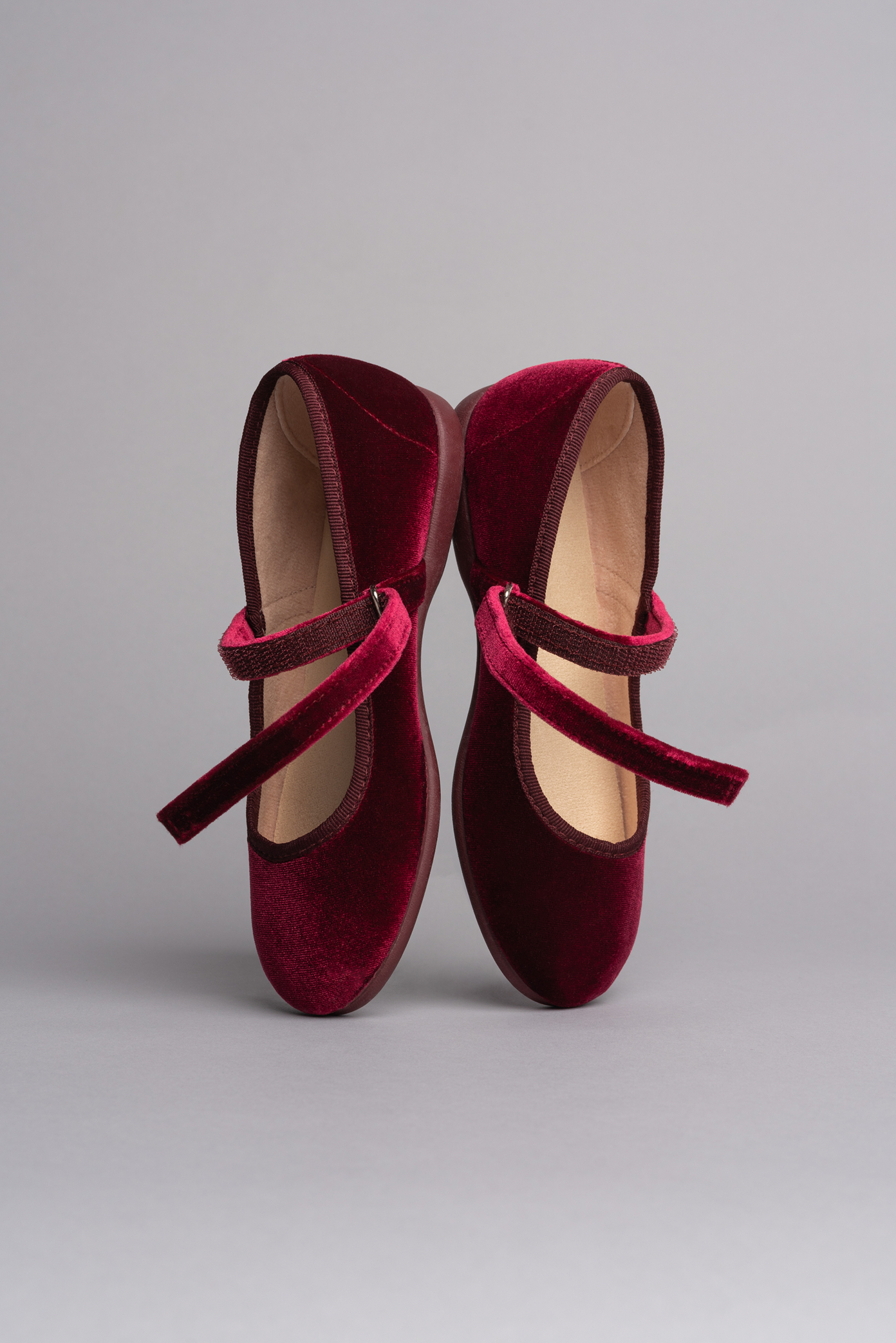
- Velvet and suede are seasonal choices. They read as more formal than leather or canvas, and they work beautifully through autumn and winter for holidays and special occasions. They are not everyday shoes, they are the ones you pull out for the family photo.

4. Decide between buckle and hook-and-loop
A buckle looks finished. A hook-and-loop, or Velcro, strap moves fast. The right answer usually comes down to one question: who is actually putting the shoe on in the morning.
- A buckle is the right choice for a formal Mary Jane or for any situation where you want the shoe to look intentional and put-together. It holds securely and reads as dressier than Velcro. The catch, a buckle requires fine motor skills to fasten, which means you are closing it every morning until she is at least five or six years old.
- A hook-and-loop strap lets a child fasten her own shoe by age three or four. That small independence matters more than most parents expect, she can adjust the fit herself when her feet swell at recess, and she doesn't need to wait for a teacher to help her get ready. The trade-off, some formal or traditional schools prefer the look of a buckle, so confirm your school's policy before you buy.
Some schools also have specific closure requirements, so check your dress code directly. If there is any question, hook-and-loop is the safer choice because it offers adjustability and independence without sacrificing security.

5. Check the toe box and the depth
Before you order, spend one minute checking two things at home.
First, look at the shoe from above. The widest point should sit at the toes, not behind them. A toe box that tapers to a point crowds the little toe, which gets squeezed against the side of the shoe through recess. A round toe box spreads pressure evenly across all five toes.
Second, press on the top of the shoe where the strap sits. There should be some vertical give, if the strap sits flat against the footbed with no room, the shoe is too shallow. A child with a high instep will have a red line across the top of her foot by midday even though the shoe fits everywhere else. If you are shopping for a wide foot or a high instep, read the full guide to Mary Janes for wide feet, because those two issues need different fixes.
6. Check the sole
A Mary Jane is, at heart, a dress shoe asked to survive a playground. The sole is what decides whether it can.
A good sole bends exactly where her toes bend. Press the front of the shoe in your hands and it should flex without a fight. A stiff sole makes her foot work harder than it should, and that usually shows up as blisters within the first two weeks. Grip matters just as much as flex. A smooth sole looks lovely and behaves badly on a wet hallway or a rainy playground. Before you buy any Mary Jane, ours included, bend the sole in your hands first. It tells you more in five seconds than any product description will.
7. Get the size right
The single most common mistake we see is a parent ordering last year's size out of habit. Children's feet grow faster than most people plan for, sometimes a full size in one season alone.
Measure at the end of the day, once her feet have swelled slightly from wear, not first thing in the morning. Stand her on a sheet of paper, trace around her foot, then measure from heel to the longest toe. Leave a thumb's width of space beyond that mark. That is the room she needs to move her toes and to grow into the shoe without swimming in it.

FAQs
Are Mary Jane shoes comfortable for kids?
Yes, when they fit correctly and are built with the right features. A Mary Jane with a soft leather upper, a flexible sole, and an adjustable strap is typically more comfortable than a slip-on shoe because the strap holds the foot securely without requiring a perfect fit. The most important factor is choosing a Mary Jane built for the specific needs of your daughter's foot, round toe box for wider feet, extra depth for high insteps, adjustable strap for swelling feet.
What's the difference between a Mary Jane and a ballet flat?
The main difference is the strap. A Mary Jane has a strap across the instep that holds the foot securely in place, while a ballet flat is a slip-on with no fastening at all. That single detail changes how the shoe fits, how long it stays on, and which ages and occasions it suits best. A Mary Jane's strap adjusts around wherever the foot is that month, so the shoe stays secure as her feet grow. A ballet flat depends entirely on a snug fit, and a snug fit is hard to maintain on a foot that changes size every few months. For most children, especially younger ones or very active ones, a Mary Jane is the more practical choice. Read our full comparison of Mary Janes vs. ballet flats for a complete breakdown of when to choose each.
Should girls wear socks with Mary Janes?
Yes, unless the school dress code specifies otherwise. A sock adds cushioning, absorbs sweat, and prevents blisters where the shoe meets the foot. For formal occasions like school assemblies or portraits, a thin dress sock matches the polished look of the shoe. For everyday wear, a regular cotton sock works fine. Some schools require a specific sock color to match the uniform, so check your dress code before picture day. Socks also make shoes last longer because they reduce friction between the foot and the shoe interior.
What age are Mary Janes for?
Mary Janes work from toddler ages through the end of elementary school, roughly ages 2 to 10. A toddler in her first year of walking benefits from the security of the strap, which keeps the shoe on during the unsteady months. An older elementary school child can work an adjustable strap and appreciate the way a Mary Jane looks with a school uniform. After about age 10 or 11, most children prefer shoes that feel more grown-up, and Mary Janes start to feel babyish to them. But that timeline varies by child, some teenagers still wear Mary Janes by choice, especially if they love the look or have wide feet that Mary Janes fit better than other styles.
Read more
People say Mary Janes, ballet flats, and ballerinas as though they are all the same shoe. They are not, and once you know what to look for, the difference between Mary Janes and ballet flats is e...
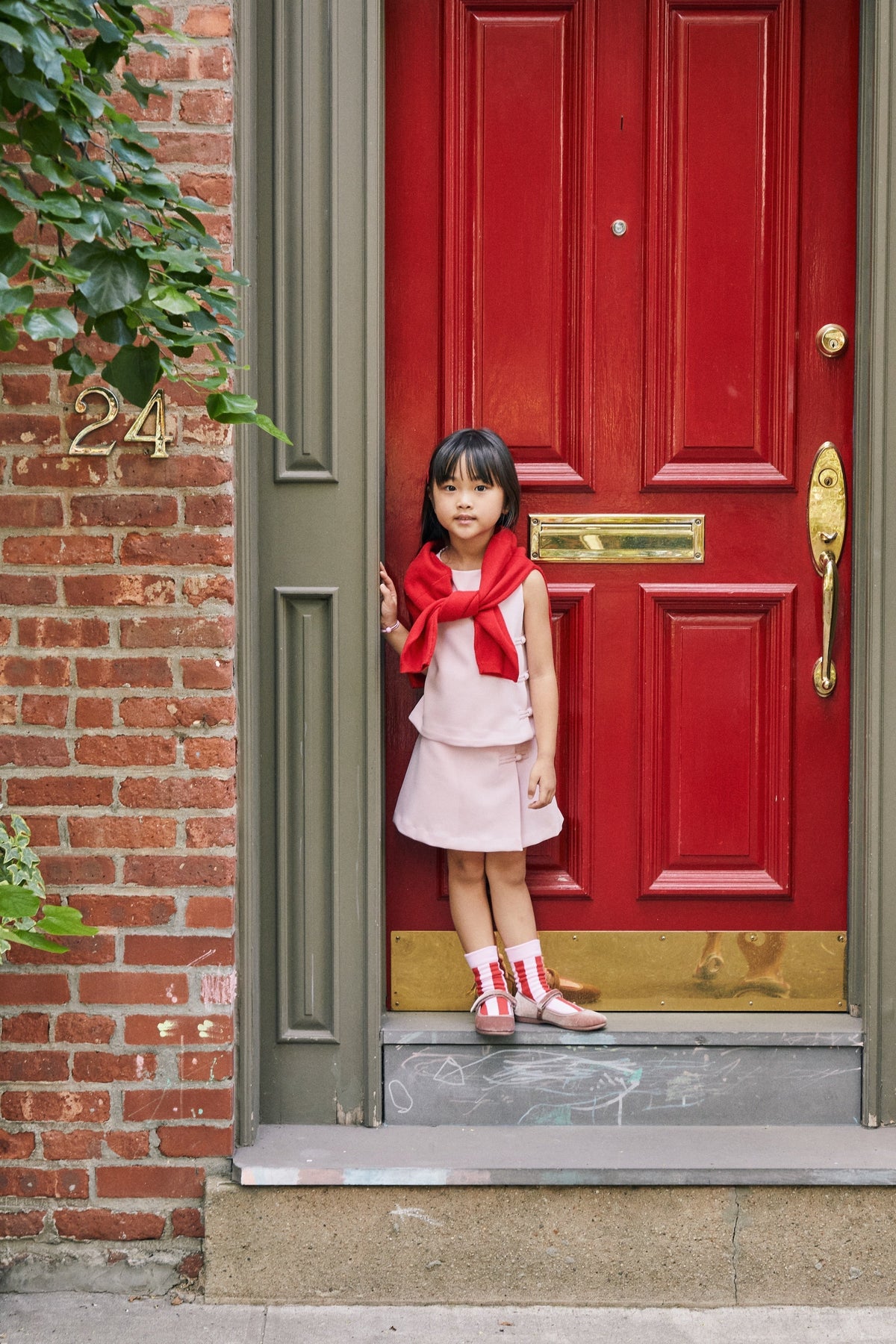
What makes a shoe a Mary Jane? A Mary Jane is defined by one thing above everything else: the strap. Here is what to look for. Rounded or slightly square toe: softer than a pointed flat. Flat or...